
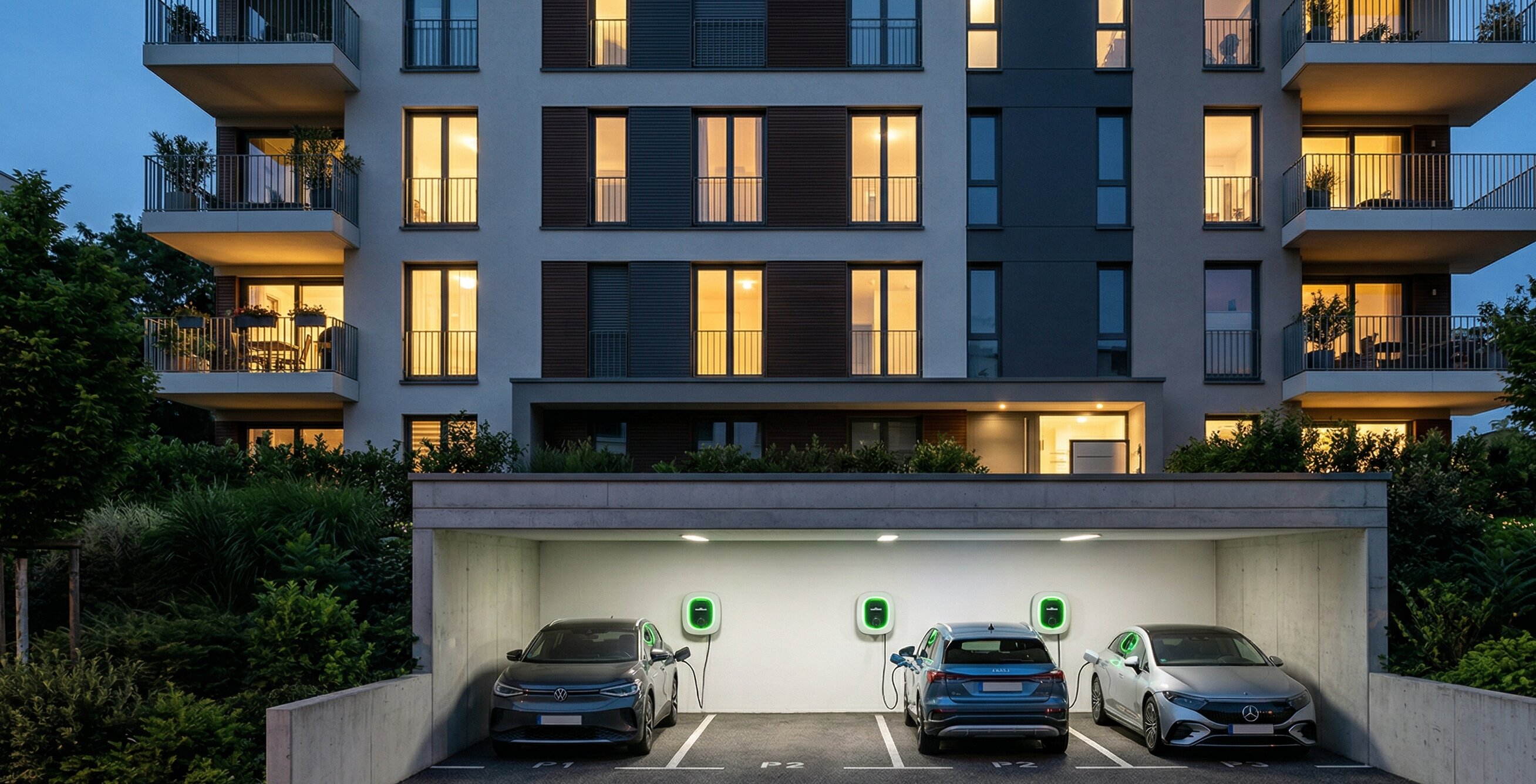
The German federal government is handing out seed capital for charging stations right now. On March 25, 2026, Federal Transport Minister Patrick Schnieder officially launched the subsidy program “Charging Infrastructure in and at Multi-Family Buildings.” Total volume: 500 million euros. From April 15, owners of multi-family buildings can apply for up to 2,000 euros per parking spot. Pre-cabling, grid connection, construction work, charging points. All covered. Anyone who uses the program smartly doesn’t just build charging options for residents. The subsidized wallbox becomes a revenue stream via cocharge, because every charging session is billed automatically.
Key Takeaways
- New federal subsidy “Charging Infrastructure in and at Multi-Family Buildings” with a 500 million euro volume
- Up to 2,000 euros per parking spot for pre-cabling, grid connection, and charging points
- Eligible applicants: homeowner associations (WEGs), private owners, SMEs, and large housing companies
- First come, first served: whoever applies first gets the grant. Application deadline ends November 10, 2026
- Strategic advantage: With cocharge, you bill every charging session. The subsidized wallbox earns money
What Exactly Is Funded?
The background: Germany has around 3.5 million multi-family buildings with roughly 9 million parking spots off public streets. Most of them have no charging infrastructure. The program tackles this and covers practically everything that costs money during installation:
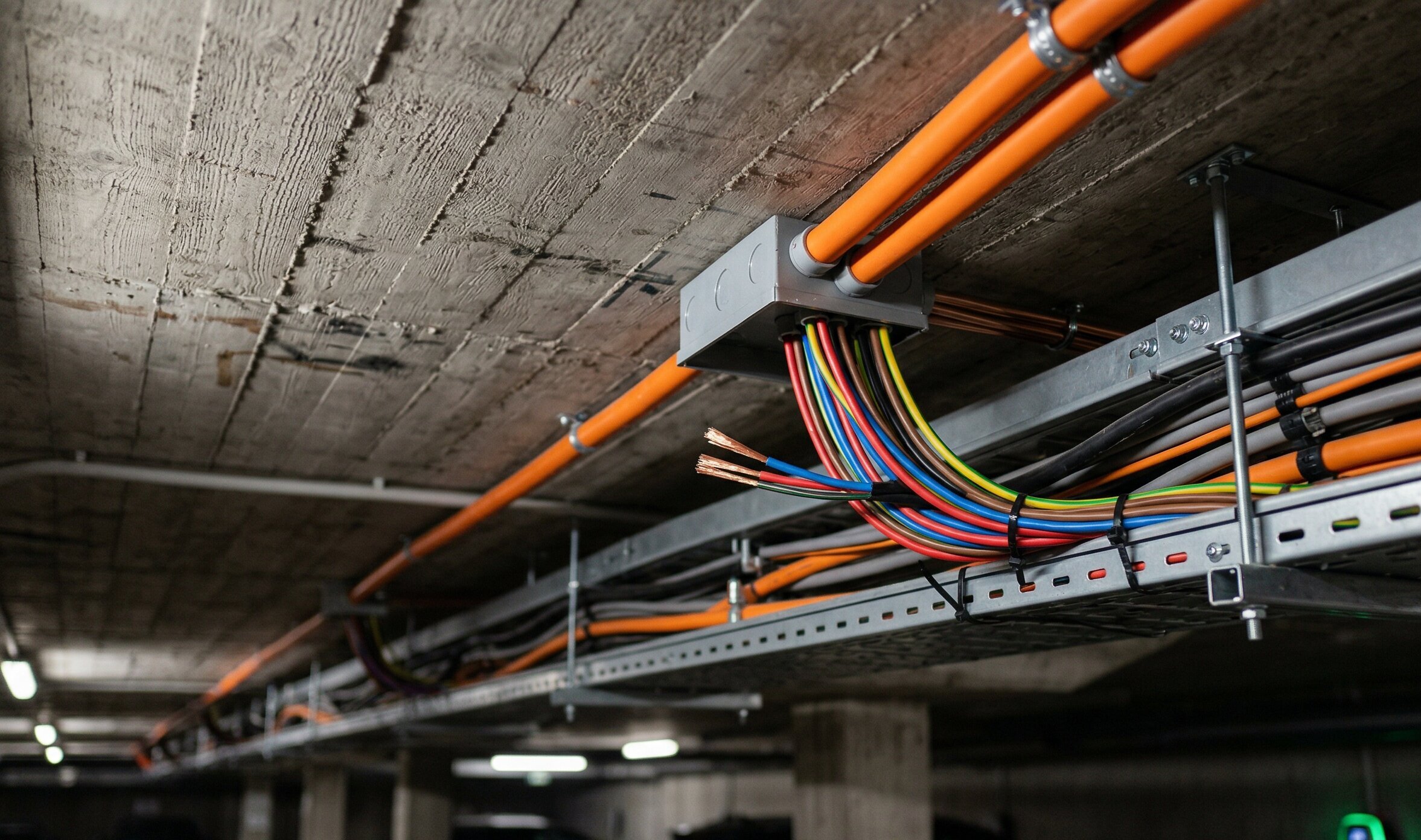
Pre-cabling is the core element. Power cables and connection points are laid to the parking spots. Even if no charging point is installed yet, the preparation alone is eligible for funding. This is crucial because cabling in underground garages and outdoor parking spaces represents the largest cost block.
Grid connection and electrical work includes cables, power distributors, protective devices, transformers, and all other electrical components needed for operation.
Construction work such as earthworks, adjustments to paths or parking surfaces, wall penetrations, and fixtures for cable routing are also covered.
Charging points are funded in connection with pre-cabling. Eligible wallboxes have a Type 2 or CCS connector and a charging capacity of 11 kW to 22 kW. A list of suitable manufacturer models is published on laden-im-mehrparteienhaus.de.
How Much Money Is There per Parking Spot?
The subsidy amount depends on the equipment level:
| Equipment | Grant per Parking Spot |
|---|---|
| Pre-cabling only (no charging point) | 1,300 euros |
| Pre-cabling + charging point (11-22 kW) | 1,500 euros |
| Pre-cabling + bidirectional charging point | 2,000 euros |
Important: The flat rate is capped. If the actual costs are below the subsidy amount, only the actually incurred amount is paid out.
Different rules apply for companies with large housing portfolios: Here, up to 70% of eligible expenses are covered, with a maximum funding volume of 30 million euros per company. Selection is done via a competitive scoring system.
Who Can Apply?
The program has three funding calls for different target groups:
| Funding Call | Target Group | Procedure | Application Period |
|---|---|---|---|
| Call 1 | Homeowner associations (WEG) and their members | First come, first served | April 15 to November 10, 2026 |
| Call 2 | SMEs and private owners of multi-family buildings | First come, first served | April 15 to November 10, 2026 |
| Call 3 | Companies with large housing portfolios | Competitive | April 15 to October 15, 2026 |
SMEs are defined per EU standards as companies with fewer than 250 employees and annual revenue of up to 50 million euros. That covers most skilled trade businesses, small real estate firms, and family businesses with rental units.
Tenants are not eligible to apply. Tenants who want a wallbox have to turn to the owner or the homeowner association.
What Requirements Apply?
Before submitting your application, check these points:
Minimum scope: Each multi-family building must have at least 6 parking spots and at least 20% of all parking spots must be electrified. Buildings with fewer than 6 parking spots are unfortunately excluded.
Residential use: The subsidized parking spots must be used by residents of the multi-family building. Commercially used or publicly accessible parking spots are not eligible.
Renewable energy: The electricity at the charging points must come from renewable sources. A green electricity tariff or your own PV system meets this requirement.
No early start of measures: Contracts with installers or suppliers may only be awarded after approval. Obtaining cost estimates beforehand is allowed and even required.
GEIG obligation: Buildings that are already subject to a statutory retrofit obligation under the Building Electromobility Infrastructure Act (e.g., new builds from March 2021) are excluded from the subsidy.
Commitment period: The subsidized charging infrastructure must be operated for at least 3 years and may not be made publicly accessible or commercially used during this time.
The Hidden Advantage: Why the Subsidized Wallbox Earns Money
This is where it gets interesting. The subsidy covers everything: cabling, grid connection, construction work, and the wallbox itself. Normally, this costs 4,000 to 9,500 euros per parking spot. With the flat rate of 1,500 euros per parking spot (pre-cabling + charging point), your own investment can drop to zero.
The subsidized charging points are intended for the building’s residents. But residents don’t charge for free. Via cocharge, you bill every charging session automatically. Residents pay via the app, you receive your earnings monthly. The wallbox that the federal government paid for becomes a revenue source.
| Item | Without Subsidy | With Subsidy + cocharge |
|---|---|---|
| Pre-cabling + grid connection | approx. 3,000 to 8,000 euros | 0 euros (subsidized) |
| Wallbox (11 kW, OCPP-capable) | approx. 800 to 1,500 euros | 0 euros (subsidized)* |
| Own investment | approx. 4,000 to 9,500 euros | 0 euros* |
| Revenue via cocharge | approx. 200 euros/month | approx. 200 euros/month |
| Amortization | 20 to 48 months | Immediately |
*Own contribution is waived as long as total costs do not exceed the subsidy flat rate (1,500 euros per parking spot). For higher costs, you only bear the difference.
With cocharge, you keep the majority of the earnings from every charging session. Billing runs automatically. Residents charge, pay via the app, and you receive your payout monthly. Setup takes 7 minutes. No ongoing costs.
More on how it works: How to earn money with your charging station
Bonus: Public Charging Point for Under 1,500 Euros
Normally, a public charging point costs 4,000 to 9,500 euros. The biggest item: pre-cabling and grid connection. After the subsidy, this infrastructure is already in place. Anyone who now connects an additional charging point and makes it publicly accessible via cocharge only pays for the wallbox: approx. 800 to 1,500 euros. The charging point automatically appears on Google Maps, Apple Maps, in BMW, VW, and Mercedes navigation systems, and in over 15 charging apps. Two revenue streams from one subsidy.
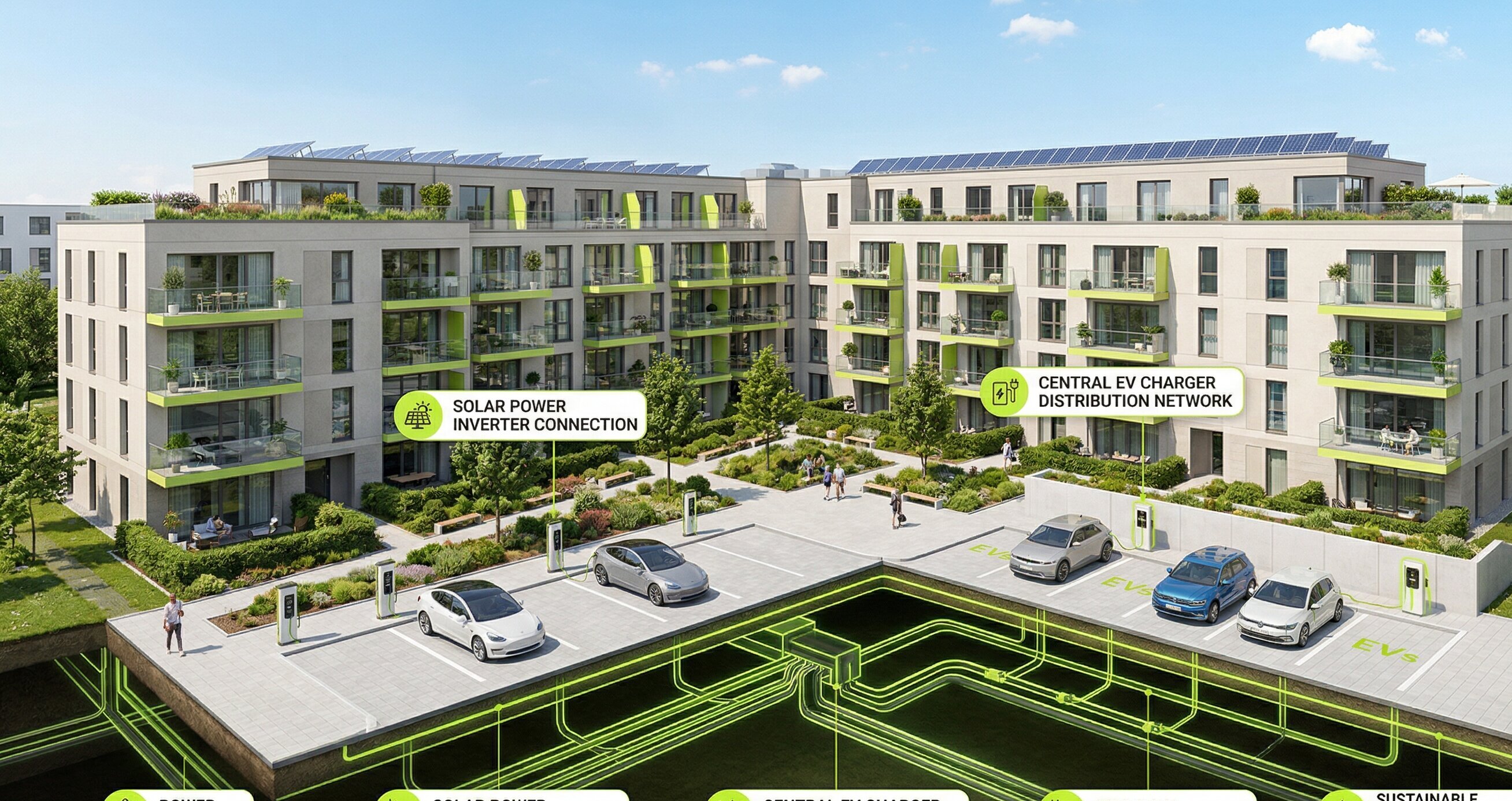
Where Does This Work Particularly Well?
WEG underground garages: The homeowner association applies for the subsidy for the owner parking spots. The wallboxes are billed via cocharge. Every owner charging their EV pays automatically via the app. The homeowner association earns money with every session.
Landlords with rental units: An owner has 20 parking spots and installs subsidized wallboxes. Tenants with EVs charge at the wallbox and pay via cocharge. The landlord offers real added value that increases property appeal and simultaneously generates monthly revenue.
Mixed-use buildings with a commercial share: A trades business on the ground floor, apartments above, 15 parking spots. The owner applies for the subsidy for the resident parking spots and bills charging sessions via cocharge. The commercial parking spots can be equipped separately on top.
cocharge handles your subsidy application. Free of charge. You don’t have to fight your way through the application portal. We take over the complete subsidy application for you. Sign up for the newsletter below and we’ll contact you as soon as the portal opens on April 15.
Step by Step: From Subsidy to Charging Point That Earns Money
1. Clarify the need and count parking spots
How many parking spots does the building have? How many of them are used by residents? How many are free or commercial? You need at least 6 parking spots, and 20% must be electrified.
2. Get a cost estimate
Commission a qualified electrician to provide a quote for pre-cabling and charging points. This does not trigger an early start of measures and is mandatory for the application.
3. Pass a WEG resolution (if applicable)
For homeowner associations, the owners’ meeting must approve the rollout. Tip: The resolution can be submitted up to 6 months after approval. So you can apply first and pass the resolution afterward.
4. Submit the subsidy application online (from April 15, 2026)
The application runs digitally via the funding portal on laden-im-mehrparteienhaus.de. The project executing agency is PricewaterhouseCoopers (PwC), and the program is managed in terms of content by the National Control Center for Charging Infrastructure (NOW GmbH). First come, first served: whoever applies first gets the grant.
5. Wait for approval, then commission work
Only after the approval notice may you award contracts. From then on, you have 24 months for implementation and 9 months for binding commissioning.
6. Bill wallboxes via cocharge
Once the wallboxes are installed, you set up billing via cocharge. Residents charge, pay via the app, and you receive your earnings monthly. Setup in 7 minutes. No ongoing costs. You keep the majority of the earnings.
Calculate your revenue potential with the profitability calculator or book a free consultation.
Deadlines: The Time Pressure Is Real
| Deadline | Date |
|---|---|
| Application start (all calls) | April 15, 2026 |
| Application end WEG + SME | November 10, 2026 |
| Application end large companies | October 15, 2026 |
| Implementation period after approval | 24 months |
| Commissioning deadline after approval | 9 months |
| Commitment period | 3 years from commissioning |
The program runs on a first come, first served basis: once the 500 million euros are exhausted, no new applications will be approved. With comparable programs like KfW-440, funds were depleted within a few weeks. Anyone waiting until mid-April should submit directly on April 15.
Frequently Asked Questions About the Subsidy
Can I earn money with the subsidized wallbox?
Yes. The subsidized charging points are intended for residents, but residents don’t charge for free. Via cocharge, you bill every charging session automatically. Residents pay via the app, and you receive your earnings monthly. The wallbox stays private for residents, as the subsidy requires, and still earns money.
My building has fewer than 6 parking spots. Can I still apply?
Unfortunately no. The minimum requirement is 6 parking spots and a 20% electrification rate. For smaller buildings, the path remains through state programs (e.g., progres.nrw) or directly installing a public charging point without a subsidy. More on this in our subsidy overview.
My building has a retail space on the ground floor. Am I still eligible?
Yes, as long as the residential share predominates. The commercial parking spots aren’t eligible, but the resident parking spots are. An example: 10 resident parking spots + 3 commercial parking spots. The 10 resident parking spots are subsidized. You can equip the 3 commercial parking spots separately.
What happens if the funding runs out before November?
Then no new applications will be approved. With comparable KfW programs in the past, subsidy pots were empty within a few weeks. Anyone seriously planning should be ready to go on April 15.
As a WEG, do I need a resolution before applying?
No. The WEG resolution can be submitted up to 6 months after approval. So you can apply first and prepare the owners’ meeting resolution in parallel.
Can I combine the subsidy with state programs?
As a rule, no other subsidies (EU, federal, state) may be used for the same costs. A combination is possible, however, if the subsidies cover different cost items and state aid caps are observed. In Baden-Württemberg, for example, the federal subsidy can be combined with the state program Charge@BW under certain conditions. When in doubt, clarify with the project executing agency or a funding consultant beforehand.
What electricity tariff do I need?
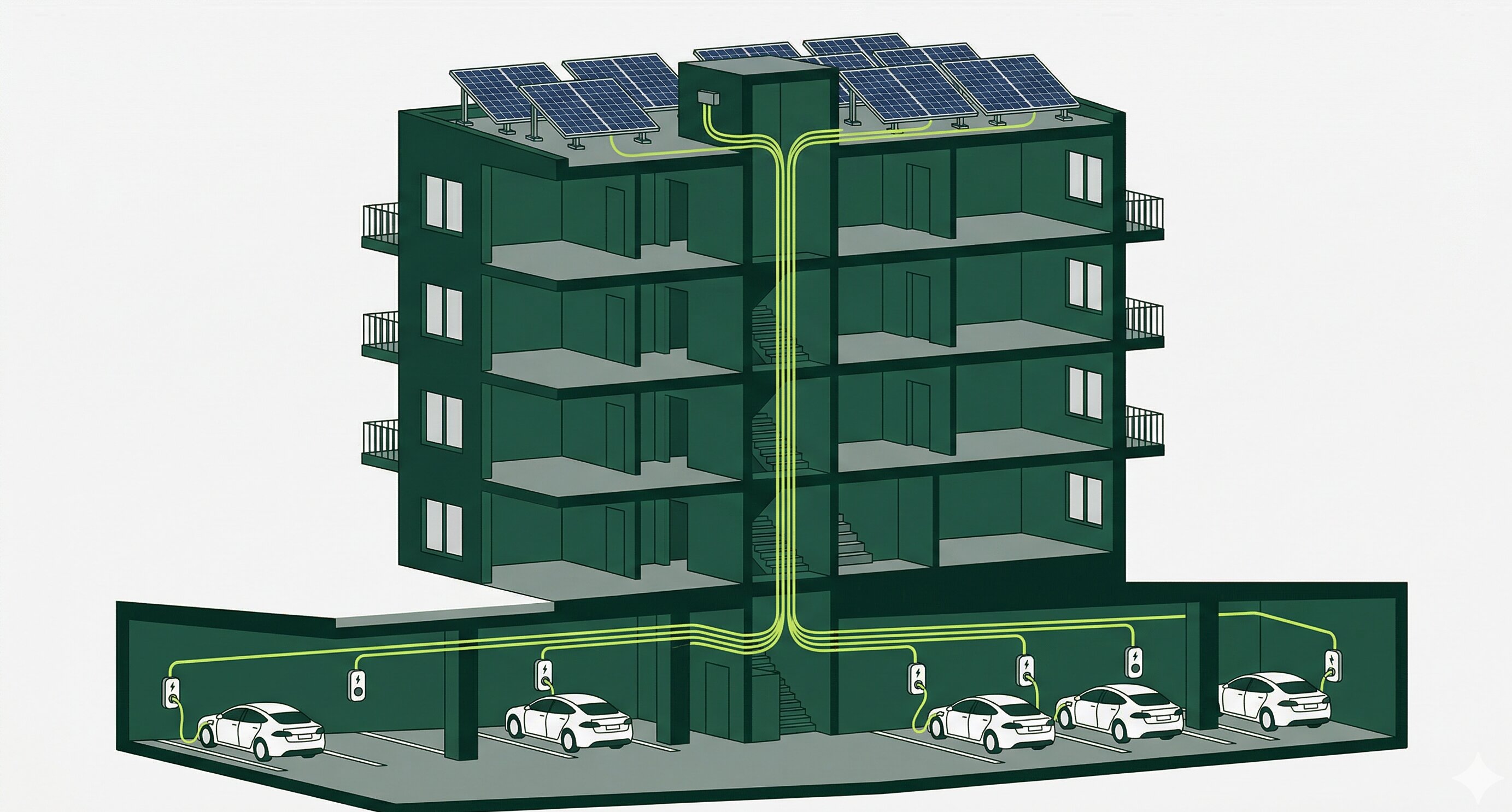
The charging point must be operated with electricity from renewable energies. A green electricity tariff or your own PV system meets the requirement. If you also have a photovoltaic system on the roof, the combination becomes particularly attractive: subsidized charging infrastructure + your own solar power + revenue via cocharge. More on this: How to earn money with PV power and a charging station
Conclusion: The Subsidy Is the Foundation. Revenue Is the Roof.
The “Charging Infrastructure in and at Multi-Family Buildings” program solves a problem that has held back e-mobility in Germany for years: millions of people in multi-family buildings have no charging option. The federal subsidy changes that by covering precisely the cost point that has deterred owners until now.
Anyone who sees the opportunity turns the subsidized wallbox into a revenue source. Via cocharge, you automatically bill every charging session from residents. No additional effort, no ongoing costs. In residential areas, with landlords, with homeowner associations, and with cooperatives.
A wallbox that costs you nothing and generates revenue from day one isn’t a risk. It’s an opportunity.
Find out what your charging point can earn: Go to the profitability calculator
Or get personal advice: Book a free consultation
Note: The subsidy conditions mentioned in this article are based on the funding guideline of the German Federal Ministry of Transport dated March 16, 2026 (BAnz AT 24.03.2026 B1) and the funding calls published on March 25, 2026. Detailed funding requirements, manufacturer lists, and application forms can be found on laden-im-mehrparteienhaus.de.